
"Latin America coffee trade"
500 article(s) found

A brief introduction to the treatment method of grinding degree and baking degree of Nicaraguan boutique coffee beans with mellow flavor
In many countries, coffee production will be seriously affected for political reasons. Nicaraguan coffee industry is no exception. The 1979 revolution forced coffee planters to flee to Miami. A period of indecision followed, when the government considered whether to redistribute land (including many plantations), which led to a shortage of coffee and a decline in production since the early 1970s

From Coffee Beans (22)--America--Venezuela
The distinctive manor coffee comes from this oil-rich country. Oil was once considered Venezuela's main export. Although coffee trees were imported from Martinique as early as 1730, coffee production was almost abandoned during the heyday of the oil industry. Coffee plantations have recently begun to revive, with the original plantations of Tipica and Bo
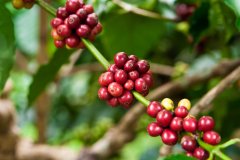
Vega, a new generation of pioneers in the field of boutique coffee, changes ordinary consumers and coffee cultivation.
Coffee is our beloved, and global coffee consumption has nearly doubled in the past 40 years, with an average of 2.25 billion cups of coffee consumed every day, of which about 400 million cups are consumed in the United States alone. But do you know where coffee comes from, how it is made, and how it becomes a delicacy in our cups? In order to change the mass consumer

Talk about Certification | ICO-- International Coffee Organization formulates the International Coffee Convention
125 million people around the world depend on coffee, and most of the coffee is produced by small coffee farmers, who farm so hard that the world consumes 600 billion cups of coffee a year. Large consumption makes coffee one of the widely traded commodities in the world. More than 60 countries mainly produce and trade coffee. These countries rely heavily on coffee exports. According to statistics, there are many countries.
Coffee trading knowledge Coffee Futures Price increase
Coffee futures trade coffee beans, and futures are both an investment and an increase in coffee. The increase in coffee lies not only in the origin, good or bad, but also for many piecemeal reasons. In the coffee futures market, the main factors affecting the price of coffee beans can be summarized as follows: 1. Changes in supply: supply and demand have a certain impact on prices, changes in supply
What are the "what" in the coffee?
What is caffeine? Caffeine is a substance found in the leaves, roots and fruits of 100 plants in nature. it is also a mixture of methylxanthine. Caffeine usually comes from coffee, dimethoate and tea. Caffeine is also used in energy drinks and drugs to treat colds and flu. Coffee and tea also contain other dimethylxanthine theophylline. Tea

The global price of coffee beans affected by drought in Brazil is likely to rise by another 50% this year.
Photo: Brazil is the world's largest coffee producer, with 17 of the 21 states producing coffee. Brazilian coffee workers are collecting coffee beans on February 16 (Reporter Zheng Yunyang) since it was introduced into Europe via Italy, the smell of coffee has spread to every corner of the world. Production in Brazil, the world's largest coffee producer, has declined in recent years, with coffee prices rising 50% year on year in 2014.
Talking about Coffee beans
1. Summary: coffee is a perennial evergreen shrub or small tree of Rubiaceae. It is native to tropical Africa and has been cultivated for more than 2000 years. The Arabs began to grow coffee in 525 BC, and it was popular for Arabs to stir-fry coffee beans. They began to grow coffee beans on a large scale after the 15th century, and were widely distributed in the tropics and subtropics of Europe, Asia, Africa and Latin America after the 18th century.
Discussion on the Feasibility of Fair Trade in Yunnan Coffee
Fair trade is a non-traditional trade method that improves the living conditions of small-scale producers and provides opportunities for sustainable development for disadvantaged producers in a short period of time. In recent years, fair trade system has been gradually perfected, forming a fair trade policy based on producer and recognition.

Hawaiian coffee bean producing area, Hawaiian coffee history
Following Cafe (Wechat official account vdailycom) found that the Beautiful Cafe opened a small shop of its own, Hawaii Coffee producing area Hawaii (Hawaii) spans 19 to 22 latitudes, south of the Tropic of Cancer, the trade wind blows the Hawaiian Islands, is a perfect coffee growing area, the 50th state of the United States, 2400 miles from the west coast of the United States, is the United States.
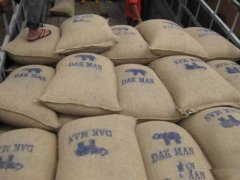
Factors affecting the price increase of coffee futures in coffee beans trading
Coffee futures trade coffee beans, and futures are both an investment and an increase in coffee. The increase in coffee lies not only in the origin, good or bad, but also for many piecemeal reasons. In the coffee futures market, the main factors affecting the price of coffee beans can be summarized as follows: 1. Changes in supply: supply and demand have a certain impact on prices, changes in supply
A brief talk on understanding coffee beans
1. Summary: coffee is a perennial evergreen shrub or small tree of Rubiaceae. It is native to tropical Africa and has been cultivated for more than 2000 years. The Arabs began to grow coffee in 525 BC, and it was popular for Arabs to stir-fry coffee beans. They began to grow coffee beans on a large scale after the 15th century, and were widely distributed in the tropics and subtropics of Europe, Asia, Africa and Latin America after the 18th century.

Introduction to the processing methods of coffee flavor description in Costa Rican Goddess Manor
Colombia pursues a foreign policy of peace and neutrality, supports the principles of self-determination and non-interference in internal affairs of all peoples, attaches importance to the development of traditional friendly relations with Latin American countries, actively promotes the process of regional economic integration, and supports the establishment of the Free Trade area of the Americas. He was elected three times as a non-permanent member of the United Nations Security Council (1974-1975, 1997-1998 and 2008-2009).
British media: demand for instant coffee in Asia rises, cheap coffee beans become mainstream
[global Network Comprehensive report] according to Reuters on December 3, the recent strong demand for instant coffee in Asia has stimulated the expansion of the cheap coffee market. Over the next 10 years, relatively inexpensive robusta beans will overtake expensive Arabica beans in the market, according to industry officials. In emerging markets such as China and India, rising incomes have led to a craze for coffee consumption.

A brief introduction to the History and Culture of the Origin and Development of Costa Rican Yerzaro Coffee
Natural resources include iron, manganese, mercury, bauxite, gold and silver, among which the reserves of bauxite, iron and coal reach 150 million tons, 400 million tons and 50 million tons respectively. The recent situation is mainly distributed in the central gold belt area of the northwestern Tilaran Cordillera Mountains. Calcium carbonate is distributed in the northwest and has high taste. The purity of calcium carbonate extracted from limestone can reach 99.5%. Brother
A brief discussion on the knowledge of Coffee beans Encyclopedia
1. Summary: coffee is a perennial evergreen shrub or small tree of Rubiaceae. It is native to tropical Africa and has been cultivated for more than 2000 years. The Arabs began to grow coffee in 525 BC, and it was popular for Arabs to stir-fry coffee beans. They began to grow coffee beans on a large scale after the 15th century, and were widely distributed in the tropics and subtropics of Europe, Asia, Africa and Latin America after the 18th century.

Coffee beans are important raw materials for making beverages
1. Summary: coffee is a perennial evergreen shrub or small tree of Rubiaceae. It is native to tropical Africa and has been cultivated for more than 2000 years. The Arabs began to grow coffee in 525 BC, and it was popular for Arabs to stir-fry coffee beans. They began to grow coffee beans on a large scale after the 15th century, and were widely distributed in the tropics and subtropics of Europe, Asia, Africa and Latin America after the 18th century.

The distance between China and the hometown of M á rquez, a cup of coffee
Many Chinese equate coffee with Colombia, and Colombian Nobel Prize winner M á rquez also shows a golden age of coffee and literature in his works. With the increasingly close relationship between China and Colombia, it is easy to have a cup of unsweetened Colombian coffee written by Marquez. M á rquez and his Colombian Coffee Columby

Introduction to the characteristics of Coffee varieties and the production areas of Coffee in Joy Manor, Nicaragua
Nicaragua is one of the major gold-producing countries in Latin America. It has been proved to have 106 gold veins, with an annual output of 70,000 ounces, ranking 13th in the world. Other minerals include silver, antimony, zinc, copper, lead and so on. Rich in geothermal resources. There are two oil deposits. Forests account for 43% of the country's area, exporting pine and mahogany. Fish and shrimp and other aquatic products are rich in the southwestern city of Nicaragua and the capital of Massaya province. Bit

Introduction to the characteristics of coffee flavor and taste varieties in Los Congo Manor, Nicaragua
Nicaragua is one of the major gold-producing countries in Latin America. It has been proved to have 106 gold veins, with an annual output of 70,000 ounces, ranking 13th in the world. Other minerals include silver, antimony, zinc, copper, lead and so on. Rich in geothermal resources. There are two oil deposits. Forests account for 43% of the country's area, exporting pine and mahogany. Fish and shrimp are rich in aquatic products. Managua, the capital of Nicaragua, is located on the border.